Delivering Seamless Digital Journeys via Intuitive Design Excellence.
Privacy Playhouse
School Project
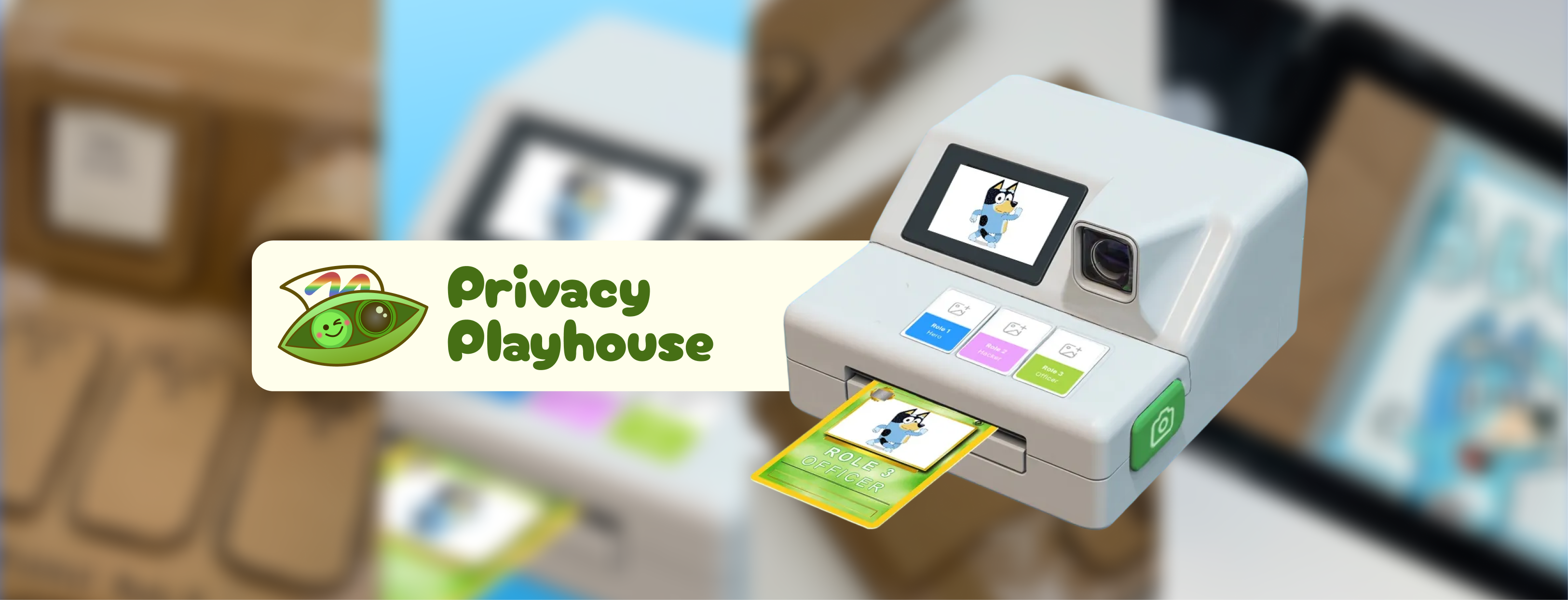
A playful, accessible camera & custom trading card printing system named Snap Pea that helps neurodivergent students learn data privacy through hands-on creation, storytelling, and a collaborative role-playing game.
Problem Statement
How can we encourage students to engage with data privacy lessons so they can be empowered to interact with the online world safely?
Users
Special Education Students in High School, Teachers
Constraints
Solution must be built around "Data Privacy" as a main theme.
Key Info
Tools:


Job Context:
School work for the University of Washington - HCDE 518 (User-Centered Design)
Project Output:
Interactive Physical & Digital Prototypes,
Collaborated With:
Classmates; Ana Bungag, Jocelyn Le, Sara Shojai
My Responsibility:
Led team on brainstorming via sketching and collaborative evaluation for the solution. Then, compiled prototypes for both the physical device, its screens, and the associated classroom game. I also recorded an interaction video with the prototype and conducted user research by conducting several user interviews.
Story:
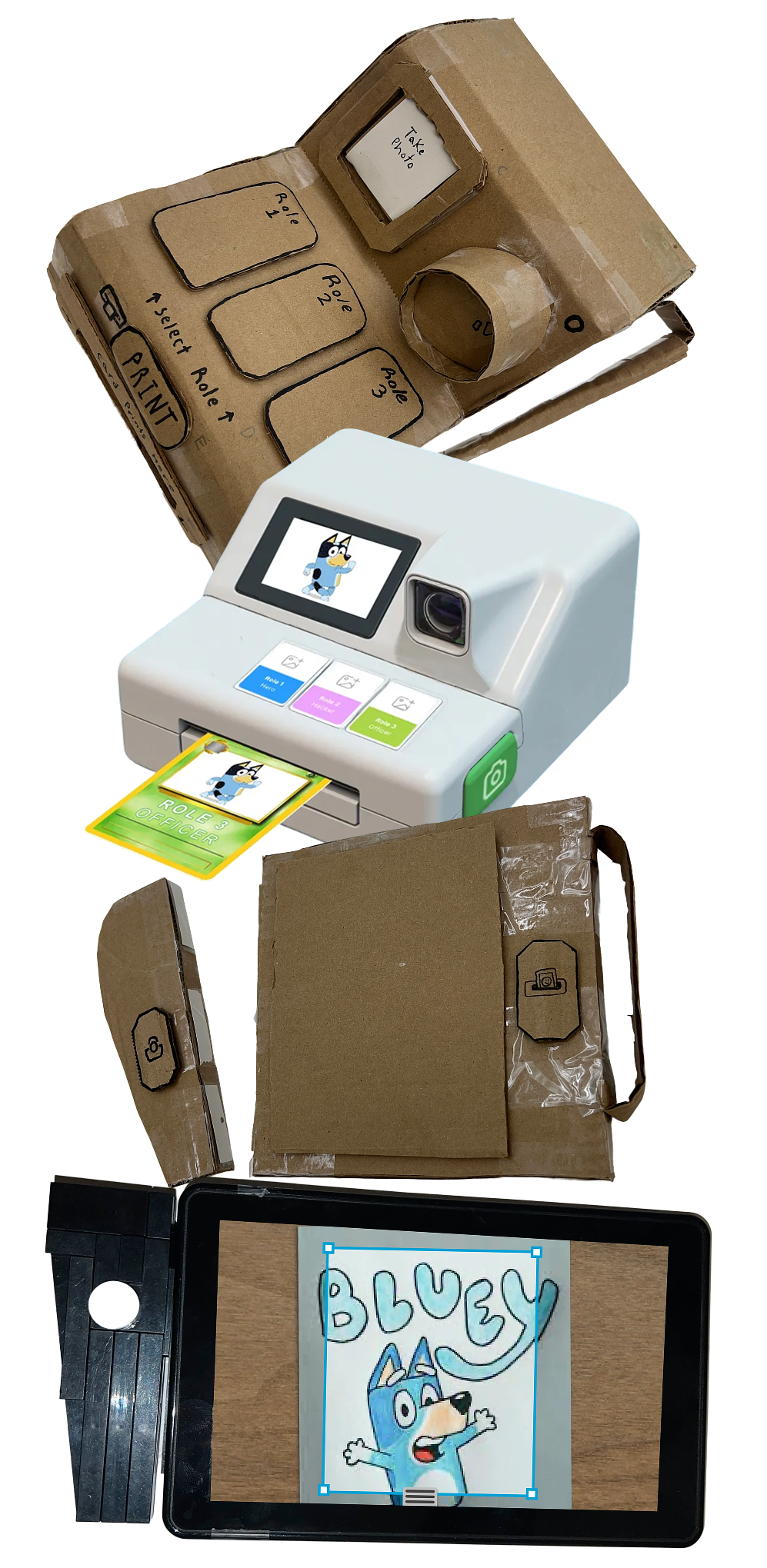
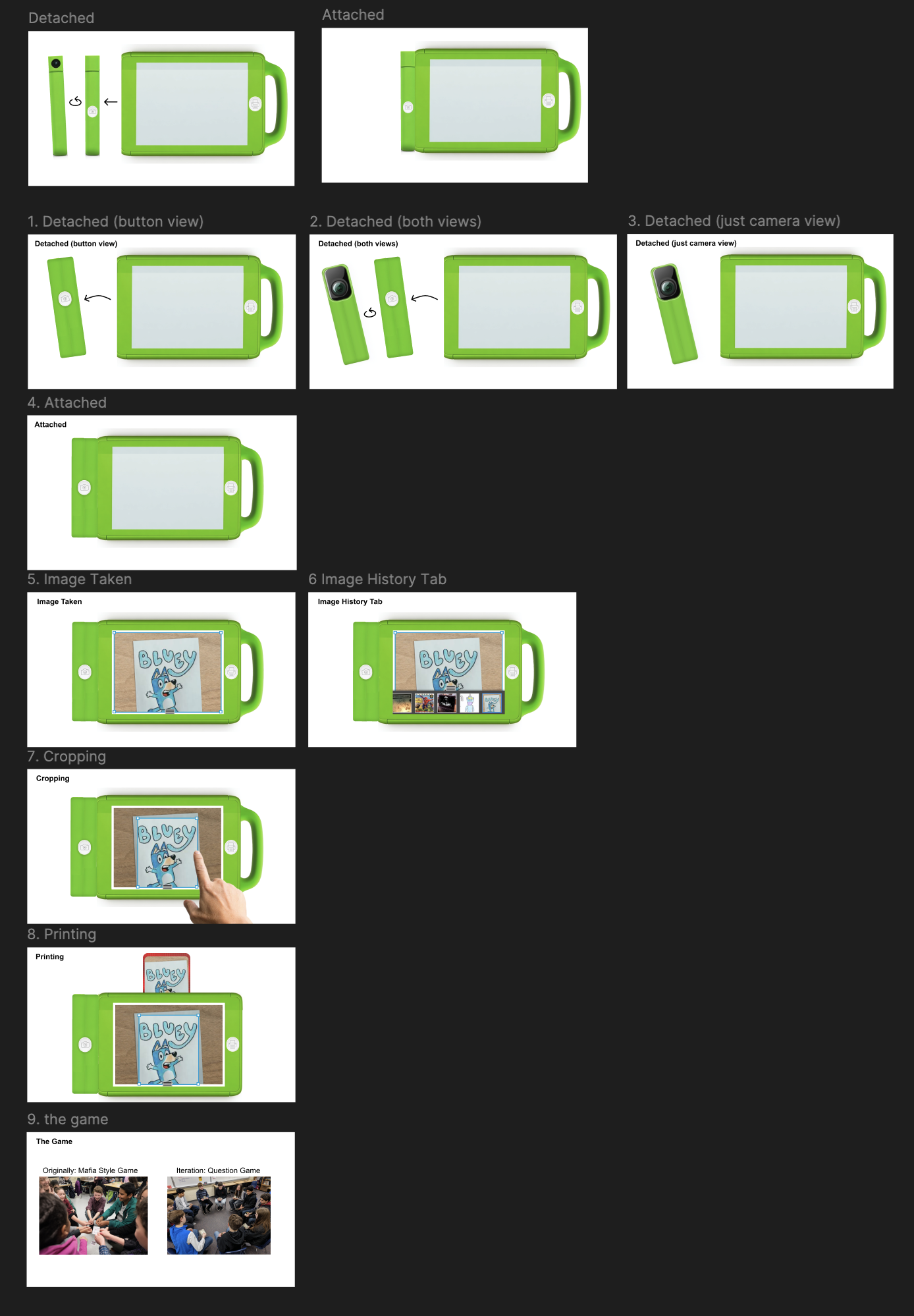
Our Solution is called “Snap Pea”, a physical device that acts as both a camera and a trading card printer. The student user can dislodge the camera from the printer and walk around the classroom to photograph their favorite characters, whether in drawings, magazines, or computer searches. That image is then displayed on the tablet printer screen, where it is cropped and printed as a trading card. The user then uses the personalized card to play a role-playing game with their classmates, in which they ask one another questions about their respective character cards. This creates a risk-free, simulated platform for children to ask questions, with space to make mistakes and pose potentially unsafe questions, thereby learning what is and is not safe to ask and answer.
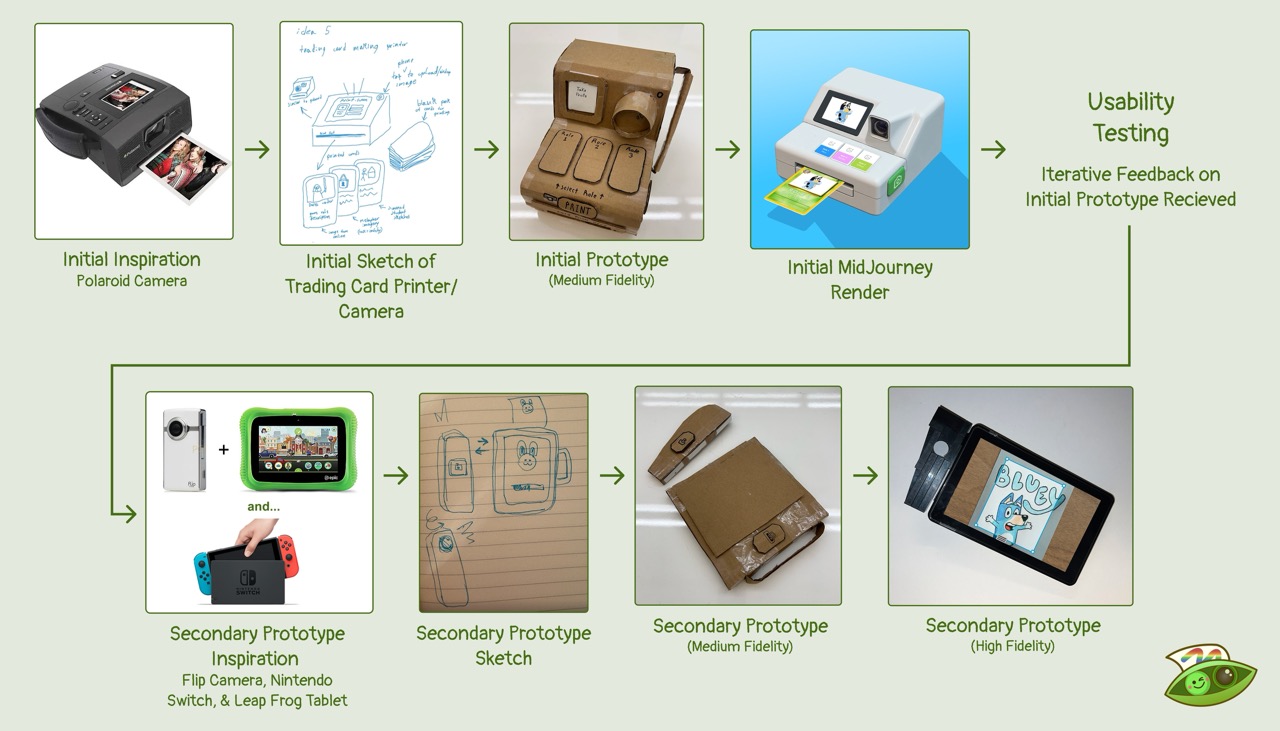
Iterative Prototyping Timeline
Approach
1. Designed for neurodiverse learners first, prioritizing accessibility, simplicity, and reduced cognitive load
2. Translated abstract digital privacy concepts into tangible, physical experiences
3. Leveraged play, storytelling, and familiar characters to create motivation and emotional safety
4. Emphasized hands-on, multimodal interaction (movement, visuals, touch) to support different learning styles
5. Used character-based role-play to reduce social risk and encourage safe experimentation
6. Balanced individual creativity with collaborative gameplay to support classroom dynamics
7. Prioritized safety at every level—physical, emotional, and data privacy
8. Iterated the design through user testing and observed classroom behaviors
9. Kept the system teacher-visible and classroom-manageable to support assessment and facilitation
10. Designed a low-barrier, intuitive interaction flow using familiar device metaphors and large physical controls
Results
The project resulted in an accessible, hands-on classroom system made up of a high fidelity camera printer device, a trading card, and a classroom game. This system helps neurodiverse learners understand digital privacy through play and physical interaction. It makes abstract concepts concrete while remaining safe, engaging, and easy for teachers to facilitate.
Our Usability Video
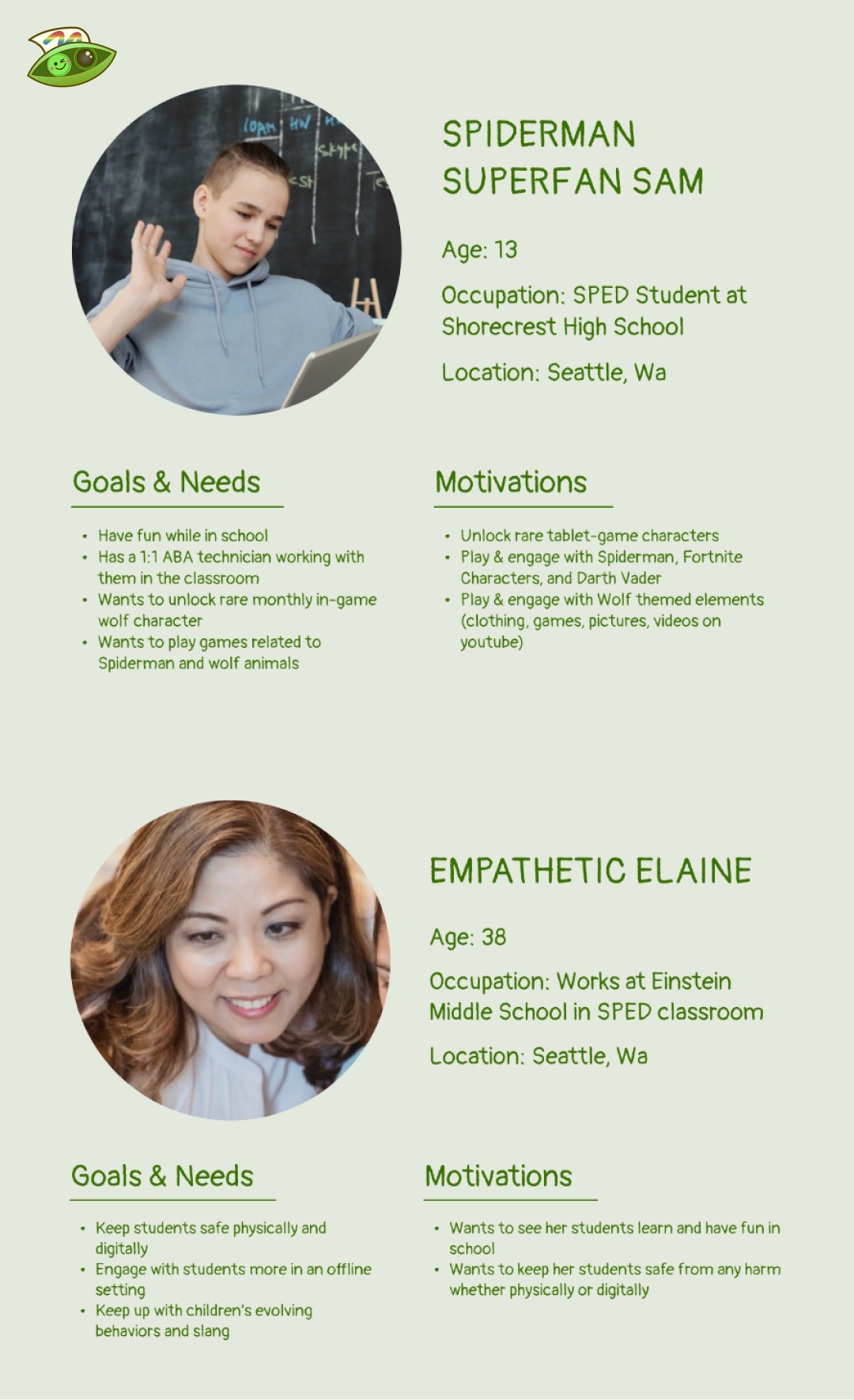
Personas
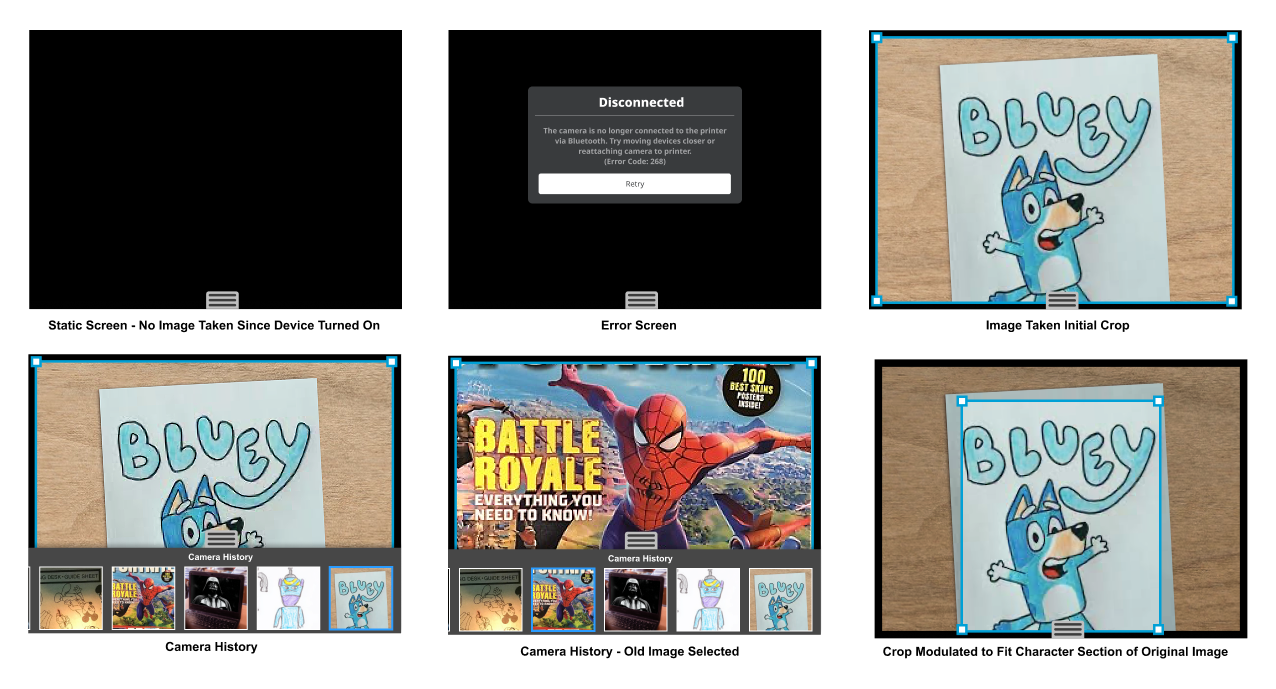
Device Screens
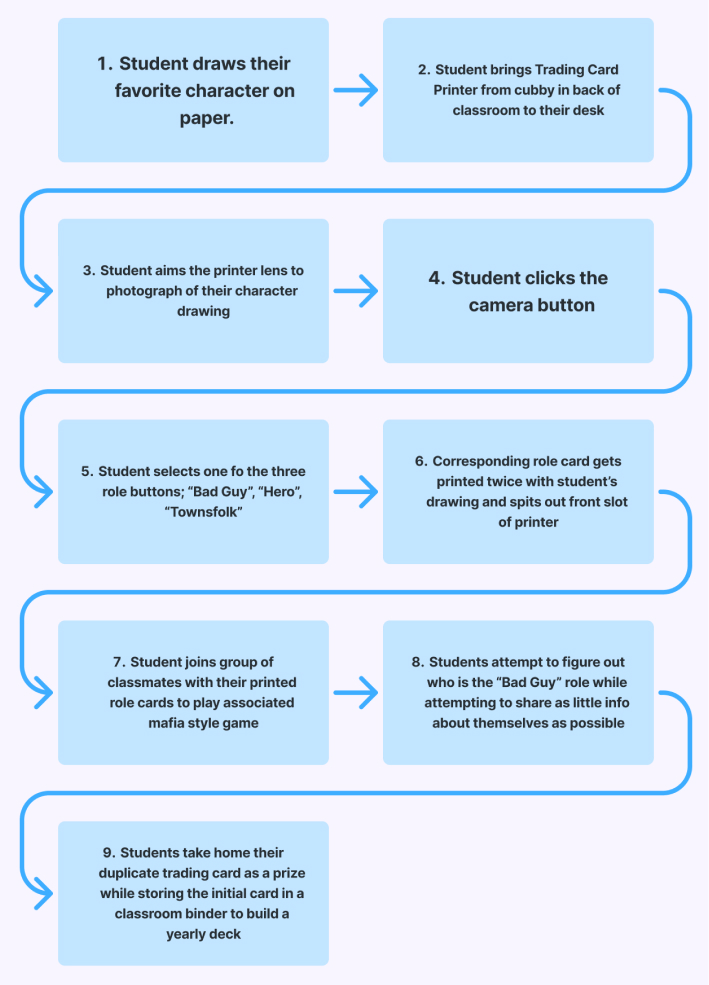
User Flow (Student)
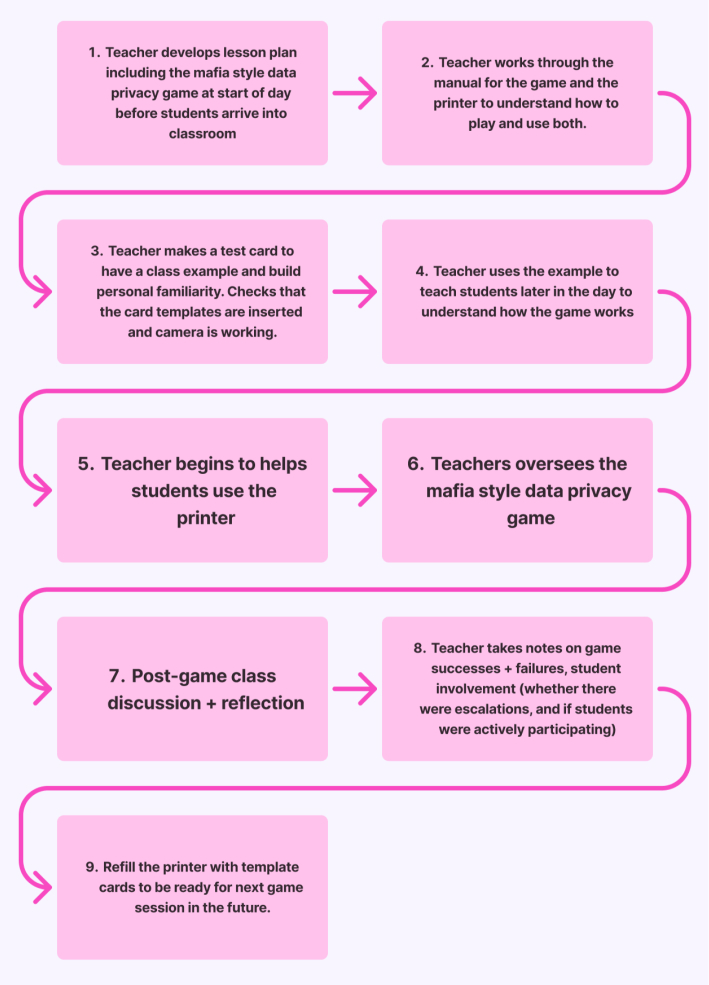
User Flow (Teacher)
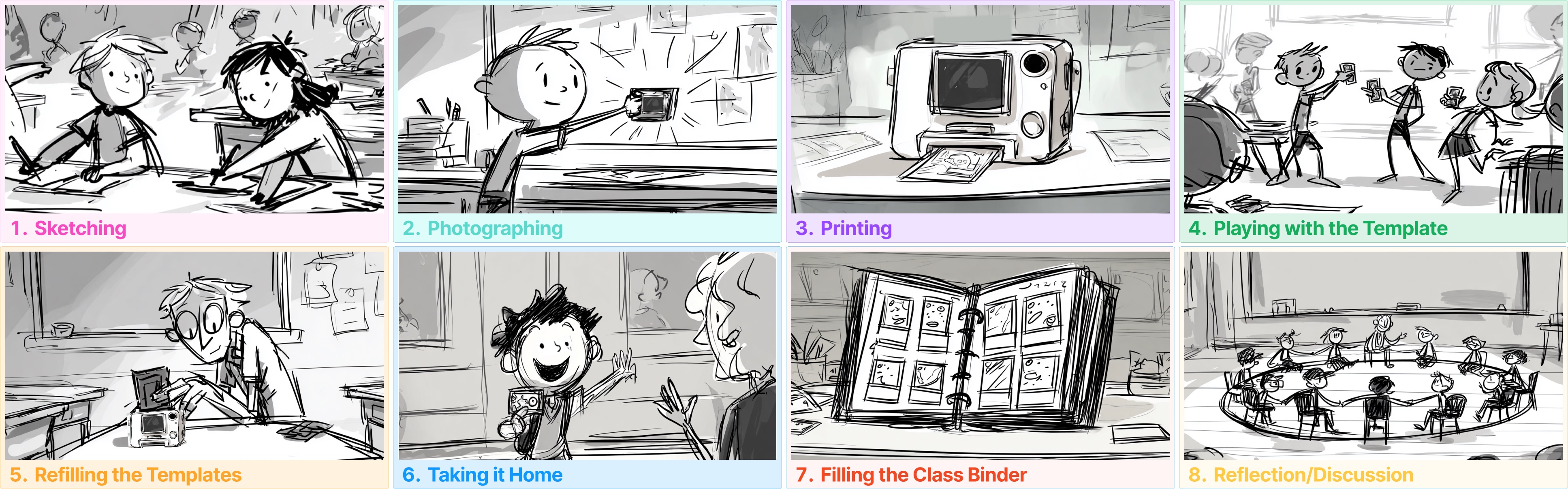
Interaction Storyboarding

Classroom Game Guide
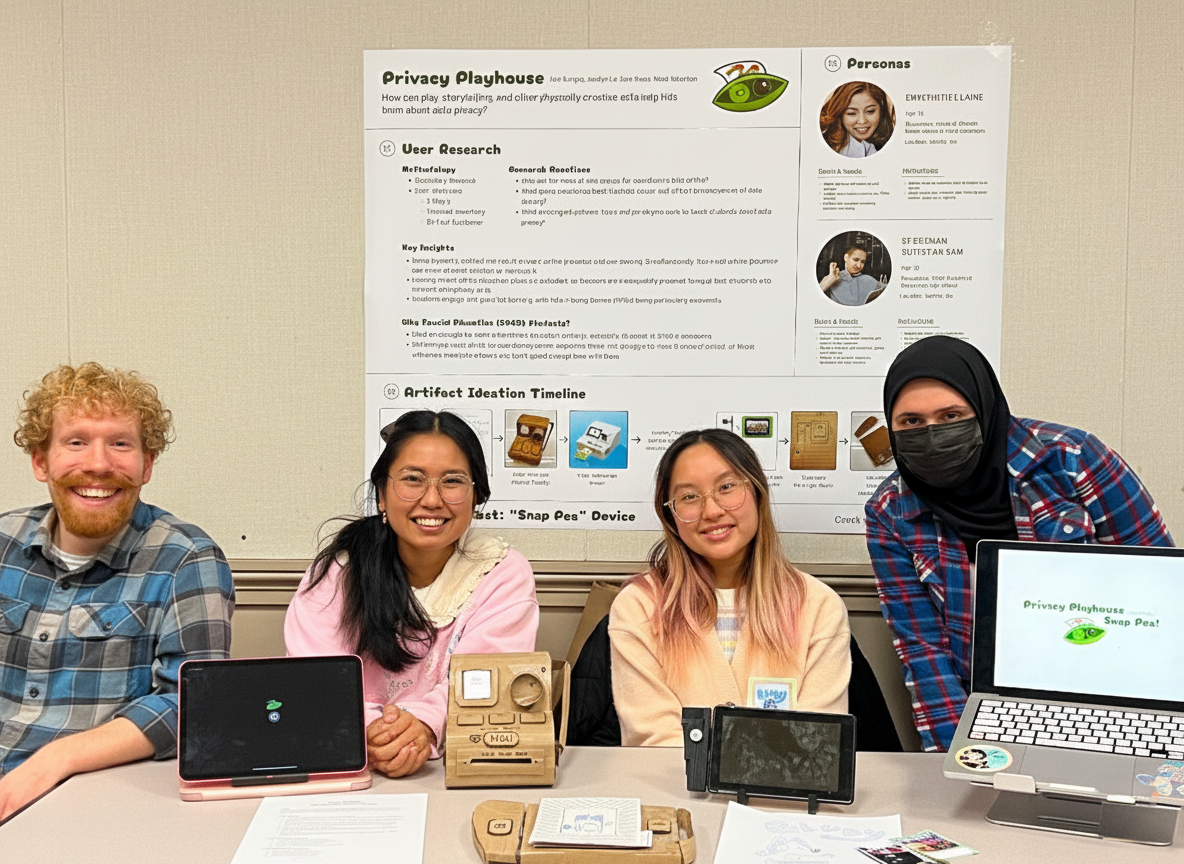
Our Team Presenting at the HCDE Fair

